

Can wall - mounted lithium battery packs be connected in series?
Leave a message

Can Wall - Mounted Lithium Battery Packs Be Connected in Series?
As a supplier of wall-mounted lithium battery packs, I often encounter questions from customers regarding the connection methods of these batteries. One of the most frequently asked questions is whether wall-mounted lithium battery packs can be connected in series. In this blog post, I will delve into this topic and provide a comprehensive answer.
Basics of Series Connection
Before discussing whether wall-mounted lithium battery packs can be connected in series, it's essential to understand what a series connection is. When batteries are connected in series, the positive terminal of one battery is linked to the negative terminal of the next battery. The primary effect of this connection is that the voltages of the individual batteries add up, while the capacity remains the same as that of a single battery. For example, if you connect two 12-volt batteries in series, the total voltage of the combined battery system will be 24 volts, but the amp - hour (Ah) rating will stay the same as that of one of the individual batteries.
Advantages of Series Connection for Wall - Mounted Lithium Battery Packs
There are several compelling reasons why one might want to connect wall-mounted lithium battery packs in series. The most obvious advantage is the increase in voltage. Higher voltage systems are often more efficient when it comes to power transmission. For instance, in a solar energy storage system, a higher voltage battery bank can reduce the current flowing through the wiring. According to the formula (P = VI) (where (P) is power, (V) is voltage, and (I) is current), for a given power output, a higher voltage means a lower current. Lower current results in less power loss in the form of heat, as the power loss in a wire is calculated by (P_{loss}=I^{2}R) (where (R) is the resistance of the wire).
Another practical application is in industrial settings. Many industrial equipment and machinery require higher voltage power supplies. By connecting wall-mounted lithium battery packs in series, we can tailor the battery system to meet the specific voltage requirements of these industrial applications. Check out our Industrial Lithium Ion Battery Packs for more options suitable for such needs.
Technical Feasibility
The technical feasibility of connecting wall-mounted lithium battery packs in series depends on several factors. First and foremost, the battery packs must be compatible. This includes having the same capacity, voltage rating when new, and chemistry. Lithium battery chemistries such as lithium - iron - phosphate (LiFePO4), lithium - cobalt - oxide (LiCoO2), etc., have different characteristics. Mixing batteries of different chemistries in a series connection can lead to uneven charging and discharging, which may damage the batteries and pose a safety risk.
Most modern wall-mounted lithium battery packs are designed with built - in battery management systems (BMS). The BMS plays a crucial role in a series - connected battery system. It monitors the voltage, temperature, and state of charge of each individual battery cell within the pack. In a series connection, the BMS ensures that each battery pack is charged and discharged evenly. If one battery pack in the series starts to deviate from the others in terms of voltage or state of charge, the BMS can take corrective actions such as balancing the charge between the packs.
Safety Considerations
Safety is of utmost importance when connecting wall-mounted lithium battery packs in series. Lithium batteries are known for their high energy density, which means that any malfunction can potentially lead to serious consequences such as overheating, fire, or explosion.
Proper insulation is essential to prevent short - circuits. All connections between the battery packs should be well - insulated, and the battery system should be installed in a well - ventilated area to dissipate any heat generated during operation. Additionally, over - current and over - voltage protection devices should be installed in the battery system. These devices can automatically disconnect the circuit in case of abnormal current or voltage levels, protecting the batteries and the connected equipment.
Compatibility with Other Components
When connecting wall-mounted lithium battery packs in series, it's important to consider their compatibility with other components in the system, such as chargers, inverters, and load devices. The charger must be able to provide the correct voltage for the series - connected battery pack. If the charger voltage is too low, the battery pack will not be fully charged. Conversely, if the charger voltage is too high, it can cause over - charging, which is extremely dangerous for lithium batteries.
Similarly, the inverter must be rated to handle the higher voltage of the series - connected battery pack. Most inverters are designed for specific voltage ranges, and using an inverter that is not compatible with the battery pack voltage can lead to inefficient operation or even damage to the inverter.

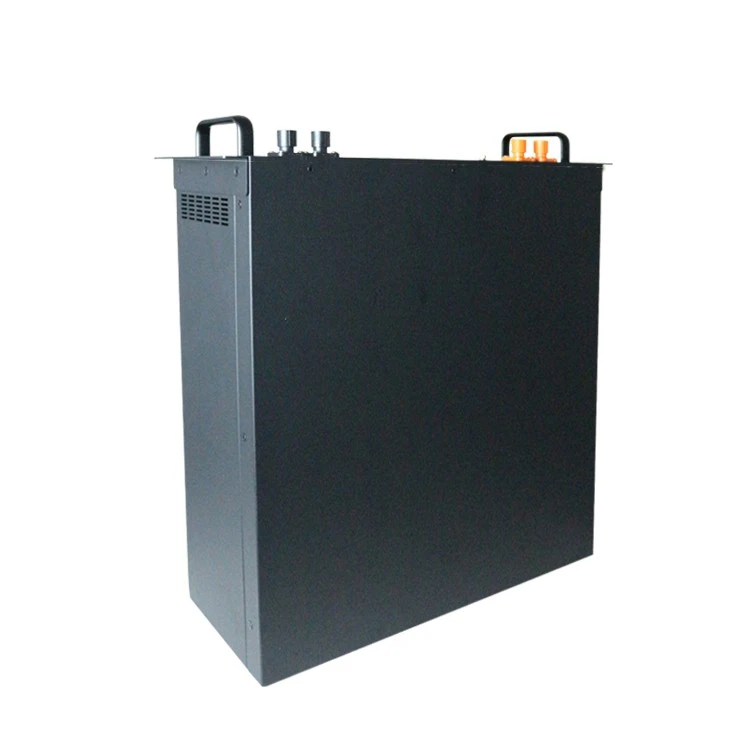
Our Product Offerings
At our company, we offer a wide range of wall-mounted lithium battery packs that are suitable for series connection. Our Low Voltage Lithium Battery products have been carefully designed with compatibility and safety in mind. They come with advanced BMS technology to ensure even charging and discharging in a series - connected system.
For customers who require more flexibility and scalability, our Stackable Lithium Power Pack is an excellent choice. These power packs can be easily connected in series to achieve the desired voltage for various applications, whether it's for residential solar energy storage or industrial power backup.
Conclusion
In conclusion, wall-mounted lithium battery packs can indeed be connected in series, provided that certain conditions are met. Compatibility between the battery packs, the presence of a reliable BMS, safety considerations, and compatibility with other system components are all crucial factors to consider.
If you are interested in exploring the possibility of using wall-mounted lithium battery packs connected in series for your specific application, we're here to help. Our team of experts can provide you with detailed technical advice and guidance. We invite you to contact us for procurement and further discussions about which of our products would best suit your needs.
References
- Linden, D., & Reddy, T. B. (2001). Handbook of Batteries. McGraw - Hill.
- Lu, L., Han, X., Li, J., Hua, J., & Ouyang, M. (2013). A review on the key issues for lithium - ion battery management in electric vehicles. Journal of Power Sources, 226, 272 - 288.


